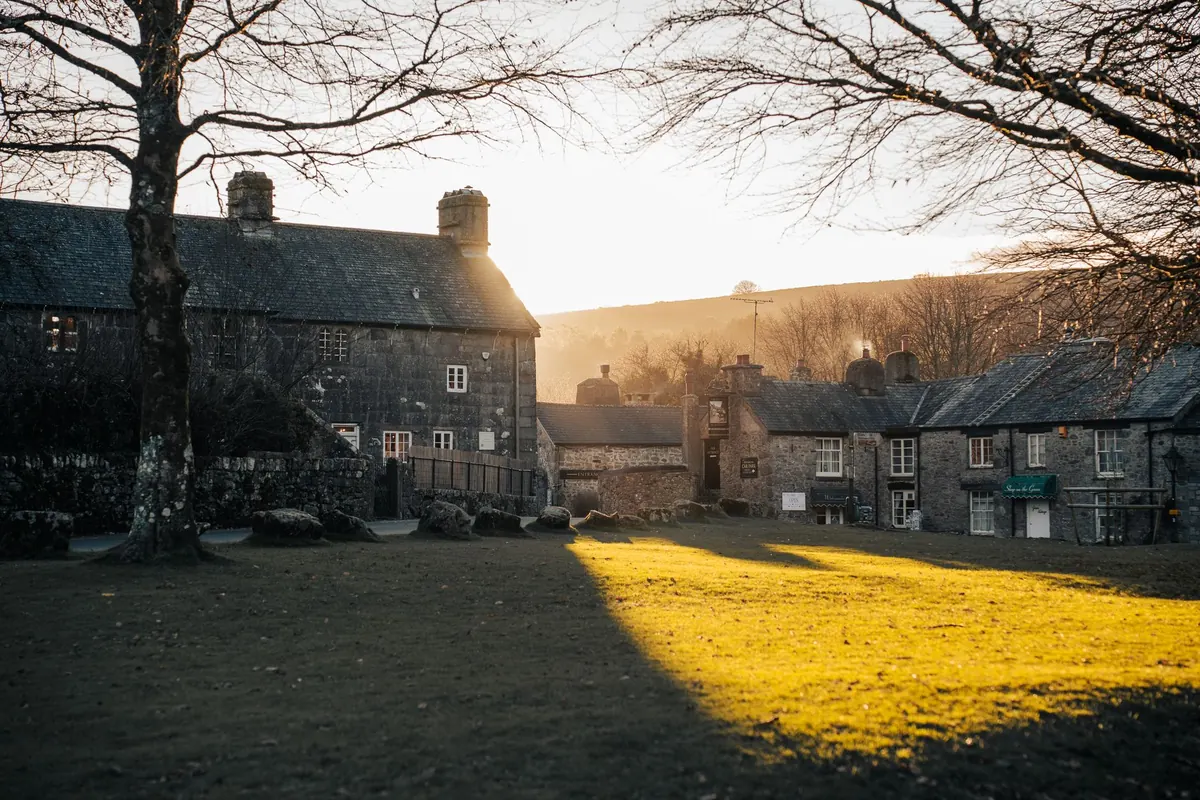
Dartmoor is at its most generous on a bright, cold morning, when the granite catches the light and a pony is the only traffic on the lane. It can also punish a badly planned first walk. A route that looks like a short stroll on the map turns into three hours of tussocks, bog and mist if you start it from the wrong car park or in the wrong weather. The ten walks below all begin at a proper car park, stick mostly to tracks and paths that hold up after rain, and are short enough to finish before the afternoon showers arrive.
Before you leave the car park
Two things decide whether a Dartmoor walk is pleasant or miserable: what you are wearing and what is in your bag. The moor sits higher and catches more wind than the towns below, so a warm morning in Exeter or Plymouth tells you very little about the top of the B3212.
- Boots or sturdy shoes with real grip. Trainers and wet granite are a poor combination.
- A waterproof jacket and a spare fleece, even in July.
- A paper map — OS Explorer OL28 covers the whole moor — and a compass. A phone with an offline map is a useful backup, not the plan.
- More water than you think you need, plus food. There are pubs and cafés at Postbridge, Princetown and Widecombe, but little in between.
- A headtorch, a small first aid kit and a charged phone in a dry bag.
- Cash and a card. Payment arrangements differ between car parks and some machines are fussy, so bring both.
Tell someone which car park you are leaving from, which route you intend to walk and when you expect to be back. If you have a heart, lung or joint condition that makes hills harder, or you are walking with someone who does, keep your first few outings short and speak to a GP before planning anything longer.
Weather, mist and knowing when to turn back
Dartmoor's weather changes faster than most forecasts suggest. Cloud can drop onto the tops in twenty minutes, and the fog that settles over the high moor in spring and autumn turns a familiar path into guesswork. Check the forecast before you leave, then check the sky from the car park. If the tops are already in cloud, choose a low-level route such as Bellever or Burrator and save the open moor for another day.
If the cloud comes down
- Turn around while you still know exactly where you are.
- Retrace your outward path, or follow the compass bearing you took on the way out.
- Stay on the path rather than cutting across open moor to save time. That is how people end up waist-deep in a bog.
- Give yourself a turnaround time and honour it, whatever the map says about the distance remaining.
Streams rise quickly after rain, so a ford that was ankle deep on the way out can be knee deep an hour later. Phone signal is patchy and often disappears entirely in valleys such as the West Dart. In an emergency, call 999, ask for the police, and they will call out Dartmoor Search and Rescue.
Five gentle routes for a first day out
- Bellever Forest and Bellever Tor — Bellever car park, off the B3212 near Postbridge. Three to five kilometres on waymarked forest tracks, with a short climb to the tor for a view over the East Dart. The best choice on a windy day.
- Burrator Reservoir circuit — start from Norsworthy Bridge or Burrator Quarry car park. About six and a half kilometres on firm forestry track, with one short stretch of quiet road. The most reliable walk on the moor after heavy rain.
- Foggintor Quarry from Princetown — Princetown car park. Roughly five kilometres there and back along an old railway track: flat, firm and easy to follow. Keep children away from quarry edges and out of the water.
- Fernworthy Reservoir — car park by the dam. Around four kilometres around the water on forest tracks, with a stone circle and stone rows just beyond the far end.
- The Granite Way, Okehampton to Meldon Viaduct — start from Okehampton station or the Granite Way car park. About five kilometres each way, flat, traffic-free, and the viaduct makes a good lunch stop. Carry on towards Lydford if you want a longer day.
Five moderate half-days with a proper climb
- Haytor Rocks from Haytor car park — only two to three kilometres, but roughly a hundred metres of ascent on granite steps and slabs. Short, steep and very exposed to wind, so leave it for a dry, clear day.
- Pew Tor and Windy Post from Pork Hill car park — about three and a half kilometres of gentle moorland paths and worn tracks. Stony underfoot, with ponies and cattle grazing. The ford at Windy Post can be high after rain.
- Hound Tor and Bowerman's Nose from Hound Tor car park — roughly four and a half kilometres. The car park is small and fills early. Expect rough ground, granite clitter to cross and boggy patches in the hollows.
- Meldon Reservoir and Black Tor — car park below the dam. About five kilometres with a steady climb along the western side of the reservoir and fine views back over the dam.
- Two Bridges to Wistman's Wood — Two Bridges car park. Around six kilometres on the path beside the West Dart. Signs ask walkers to keep to the path and not walk among the trees, which protects a rare high-altitude oakwood. Boggy in places and the hardest of the ten to follow in mist, so save it for a clear day.
Gates, ponies and dogs
Cattle, sheep and ponies roam freely across the moor, so close every gate behind you unless it is tied open, and never walk between a cow and her calf. If cattle turn to face you, back away rather than pushing past. Do not feed the ponies, however photogenic they look.
Dogs must be on a short lead on open access land between 1 March and 31 July to protect ground-nesting birds, and around livestock at any time of year. Take all litter home, light no fires and use no disposable barbecues. Park so that you are not blocking a farm gate, a passing place or a field entrance. Most moorland car parks are small, so on a summer Saturday aim to arrive before ten in the morning.
Before you pull out of the car park
Note the grid reference of where you have parked, check the cloud on the tops and the wind direction, and put the map somewhere you can reach without taking your pack off. Choose a turnaround time and stick to it. A three-kilometre walk finished in good humour beats a ten-kilometre walk finished in the dark.
Build up gradually. The visitor centres at Princetown and Postbridge keep details of guided walks and events through the year, and their staff will happily suggest something that suits the day's forecast. Dartmoor is not going anywhere, and there is no prize for covering it all in your first season.
Photo: Clément Proust / Pexels