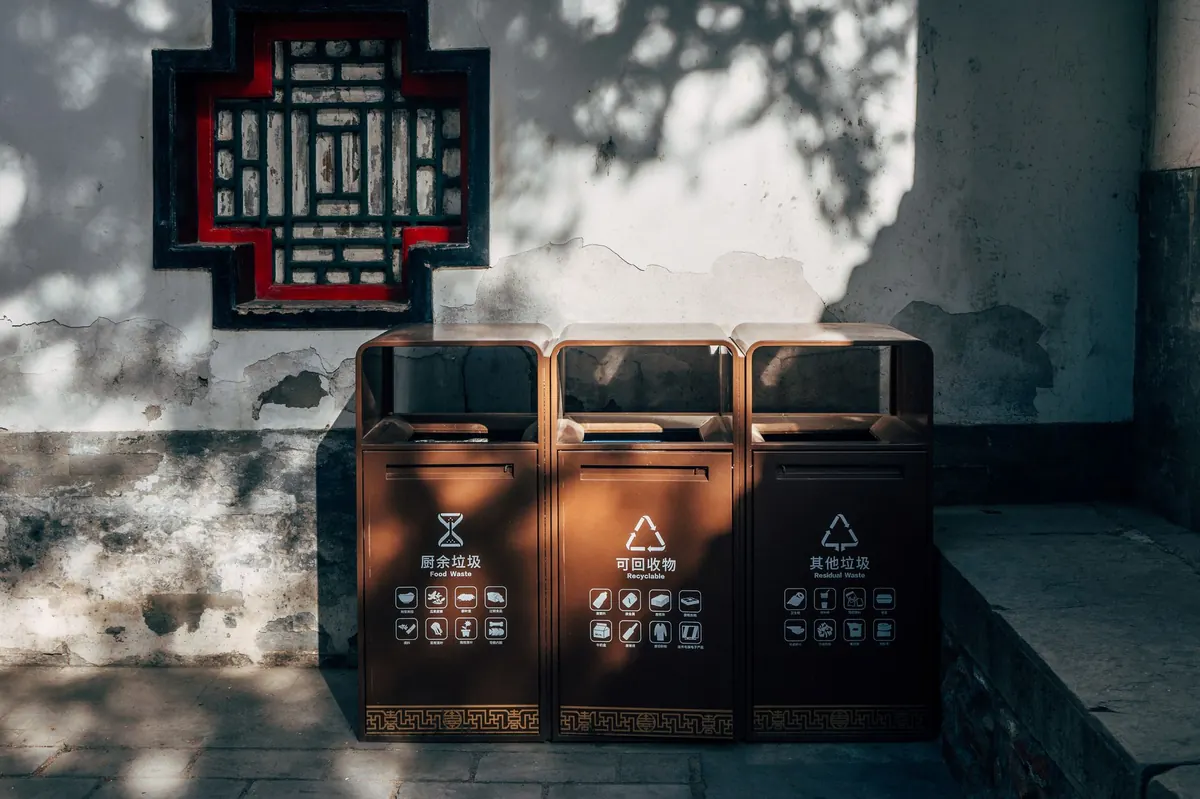
If bin day in your street has started to feel like a moving target, you're not imagining it. Recycling rules across England are being standardised over the next couple of years, and in Devon that change arrives through eight different district councils, each running its own rounds, its own containers and its own calendar.
Nobody is asking you to become an expert in waste policy. But a few small adjustments now will save you the annoyance of a rejected bin, a missed collection or a kitchen caddy you never ordered. Here's what's actually changing, what it means for the containers outside your back door, and how to find the right schedule for your postcode.
The short version: what's actually changing
The direction of travel is simple. Instead of every council collecting a slightly different mix of materials, households across England will be offered the same core set of recyclables, plus a weekly food waste collection.
Most of the household deadlines land at the end of March 2026, but 2025 is the year the groundwork shows up on doorsteps: letters through the post, new caddies delivered, rounds re-drawn, and in some areas trials of new containers. Larger businesses have had to separate their recycling and food waste since March 2025, which is one reason you may have seen new bins behind shops and cafes in your town.
Three things worth remembering:
- Food waste becomes a weekly, separate collection for households, provided free of charge.
- Dry recyclables are standardised — glass bottles and jars, metal cans and tins, plastic bottles, pots, tubs and trays, and paper and card.
- Garden waste is not part of this. Councils can still charge for it, and many do.
Who sets the rules where you live
This is where Devon gets confusing, so it's worth being precise. Collection is handled by your district or borough council: Exeter, East Devon, Mid Devon, North Devon, South Hams, Teignbridge, Torridge and West Devon. Disposal and the recycling centres — the tips — sit with Devon County Council. Torbay and Plymouth are unitary authorities and run their own arrangements from top to bottom.
The practical upshot: a schedule that works for your cousin in Barnstaple tells you nothing about your street in Newton Abbot. If you live in a flat, a converted house or a shared building, your arrangements may differ again, often with communal bins and a managing agent rather than a wheelie bin per household.
What goes in which container
The core list is the same almost everywhere: glass bottles and jars, steel and aluminium cans and tins, plastic bottles, pots, tubs and trays, and paper and card. Keep it clean, dry and loose. Rinse the bean tin. Don't bag your recycling, because bags get pulled off the line and the contents often end up as rubbish.
The confusion comes from the items sitting just outside that list. A few rules of thumb:
- Pizza boxes: tear off the greasy, cheesy base and bin that part; the clean lid can be recycled.
- Pyrex, drinking glasses and mirrors: different glass, different melting point. Not in the glass stream.
- Plastic bags, film and crisp packets: not collected in most kerbside rounds yet. Many supermarkets take carrier bags and film back at the front of store.
- Shredded paper: tangles sorting machinery. Some councils accept it separately; others ask for it in the general waste.
- Batteries and vapes: never in any bin. They cause fires in collection vehicles and at waste plants. Take them to a shop that sells them or to a recycling centre.
- Textiles: use the council's textile collection if it runs one, or a charity bank.
If you're unsure, put it in the general waste. One wrong item can contaminate a whole load, and that load then gets landfilled instead of recycled.
Food waste: the change most kitchens will notice
Weekly food collections already run in parts of Devon, and where they do, the change is mostly about frequency and clarity. Where they don't, expect two containers: a small caddy for the worktop and a larger one for outside.
Everything edible goes in: raw and cooked food, meat, fish, bones, dairy, eggshells, tea bags, coffee grounds and plate scrapings. Packaging stays out. So do liquids in any quantity — drain the milk first. Pet waste and so-called compostable packaging are accepted in some areas and not others, so check before you commit.
To keep a caddy bearable, line it, empty it every couple of days, and freeze smelly items like fish skins until collection day. If your council supplies compostable liners, use those rather than ordinary plastic bags.
Bin sizes, storage and missed collections
Most households will keep the general waste bin they already have. What arrives is extra: a caddy, sometimes an additional container for glass or paper, occasionally a different wheeled bin if your council is moving away from sacks.
Small properties, flats and terraced streets with nowhere to store bins are a genuine problem, and councils know it. If you can't physically move a bin to the kerb — because of age, disability or a long steep drive — ask about an assisted collection. It's a normal request, not an imposition.
If a collection is missed, report it the same day or the next working day and leave the bin out. Photographs help. And check whether the bin was refused rather than missed: a tag or sticker on the handle usually explains why.
Sorting out your schedule: a five-minute job
- Search for your district council's waste pages directly — Mid Devon, Torridge, South Hams and the rest — rather than relying on a third-party bin calendar.
- Enter your postcode in the council's bin day lookup to see your current round and any changes.
- Read that council's accepted materials list. National lists are a starting point, not the final word.
- Sign up for email or text reminders, or download the council app if there is one. Rounds change more often than people expect.
- Note bank holiday rearrangements now. Collections usually shift by a day and then slide for the rest of the week.
- Check Devon County Council's pages for recycling centre opening hours and what the tips take, including the awkward items.
What to do this month
Find your council's accepted materials list and stick it inside a kitchen cupboard door. Check your collection day online and set a phone reminder for the evening before. If you don't have a food caddy, order one before the rush. Keep batteries, vapes and aerosols out of every bin.
And if something seems contradictory — a leaflet that disagrees with the website, or a neighbour who's been told something different — ring the waste team. Councils would far rather answer a thirty-second question than send a lorry out to a street full of contaminated bins.
Photo: 征宇 郑 / Pexels